Year 5 class
'Excellence Everyday'
'Learn, Live, Laugh and Love Ashurst'
Learn to be inspiring and make a difference to this world, we know how amazing you are,
Live with understanding and compassion for others, knowing we are all different and special in a community where equality stands tall,
Laugh and listen to the enjoyment of learning and excitement of everyone celebrating their achievements,
Love Ashurst, our special school and the hub of supportive staff, parents and children who aim high to be the best they can be.
Year 5 - Important Information
Year 5 is an exciting stage in Key Stage 2 where children begin to take on greater responsibility and independence. Throughout the year, pupils will be encouraged to develop their confidence, organisation and resilience across all areas of learning. We work closely with families to keep everyone informed, and key updates about routines, homework and curriculum focus areas will be shared regularly.
About the Year 5 class
Staff Team - Miss Hunter and TBC
Our Year 5 classroom is a supportive and welcoming environment where every child is encouraged to achieve their best. We promote positive attitudes to learning, teamwork and mutual respect. Across the year, pupils will be challenged, celebrated and guided as they grow academically, socially and emotionally. We aim to ensure every child feels valued, confident and ready for the demands of upper Key Stage 2.
Learning Environment
Year 5 is an extremely exciting year. A chance for our children to develop their confidence, independence and cooperation through a wide range of activities. As a member of the Year 5 team, children are encouraged to do the very best they can at every opportunity and the range of experiences are ever increasing. Excellence is key to what we do, whether children are inspired by a particular text or an exciting Geography project. Children will find our topics exciting which will make their experience in year 5 a rewarding one.
Feelings of wellbeing are fundamental to the overall health of an individual, enabling them to successfully overcome difficulties and achieve their full potential. That's why at Ashurst Mental health and well-being are high priority. We work hard to support the children to be happy and free from worry and anxieties. Therefore, we encourage the children to connect, be active, keep learning, help others and take notice. We also use wonderful stories to explore themes linked to mental health and well-being.
Our Learning Environment is specifically organised to be rewarding and stimulating. Children are encouraged to take ownership of displays and areas so that they grow with them throughout the year. English and Maths are obviously very important and the key skills to excel in these areas are evident in the classroom environment to support the children's learning. Help is never far away and children find examples of best practice close to hand. We have working walls and writing resources, all of which are designed to help with our children's learning. We are certain the children will learn from their time with us and demonstrate their learning through high quality work.
All individuals
Each child enters Year Five at a different stage. Therefore we treat every child as an individual and plan to cater for their individual needs. We understand that every child learns in a different way and has different interests and it is our aim to adapt our teaching to suit the children. We encourage their independence throughout, allowing them to take ownership of their learning and achievements and to understand how to solve problems on their own.
Rules and Routines
At the beginning of the year, children are encouraged to contribute to our class rules and vision. This runs alongside the schools policies and procedures and is expected to further improve the learning environment for all and in turn develop strategies for 'Behaviour for Learning'. Conversation and discussion are encouraged in Year 5 and is balanced with dedication to learn and succeed through quiet and independent work.
Routine
-
Doors open 8:45am
-
Registration for Year 5 takes place at 8:55 am and the school day ends at 3:15pm
Important things to remember: -
-
Please provide a healthy snack for your child to eat at playtime.
-
Each child can have their own water bottle on their desk, please provide these with their name on.
-
We have PE every Monday and Wednesday– please ensure that your child attends school on this day in their PE kit On these days children must wear the following PE uniform: Black jogging bottoms or black sports leggings , white PE tops , black hoody tops . Or a Summer PE kit : the usual red shorts and the white PE top.
-
Swimming takes place in Year 5 from February each Monday.
-
There is a big emphasis placed on homework and extending learning beyond the classroom. This will usually consist of spelling activities but may at times relate to other subjects. Homework is set on a Friday and should be completed by the following Thursday – please ensure you bring back spellings to Mr Barnes or Mrs Duffy and complete online tasks on time. Children are expected to have rapid recall of all their times tables so it is essential children access Times Table Rockstars daily. We recommend little and often and a multi-sensory approach can help children to learn.
-
We will begin to send home reading books out as soon as we have read with your child. Returned books will go into a quarantined box before being returned to the library. Your child will select a new home reading book from the school library every week, if they need to change it. We encourage the children to read at home every night but at least three times each week. This is part of the homework expectations and we appreciate your support with this. Your child has their own personal reading record for you to record their reading journey. We expect these to be completed every time your child reads their school book.
-
Topic webs will be uploaded onto this class page in the first week of each half term. Topic webs will inform you of the learning taking place and will provide a list of project homework activities to complete at home. We are looking forward to you emailing in, or posting onto Seesaw, photos of your wonderful work for our class page on the website.
-
Children are asked not to bring any other personal items into school; we will provide all necessary stationery.
Book recommendations for Year 5
Follow the link below to view a wealth of recommended books for your child in Year 5.
You will never be short of book suggestions with this site. Children we hope you find something you love.
'The Reader Teacher' - Visit this site to view 100 'must reads' for YEAR 5 https://www.thereaderteacher.com/year5
Year 5 Long Term Plan 2026-2027
Learning 2026-2027
English
Reading
Year 5 reading lessons build on children’s knowledge and understanding by linking the texts to the wider curriculum, ambitious age appropriate text choices, and involve the whole class in wider discussions. Children are taught vocabulary and a range of reading strategies are implemented in lessons, so that all children are able to participate whilst improving their fluency, pace and understanding. We are also looking at play scripts including works by Shakespeare.
Writing
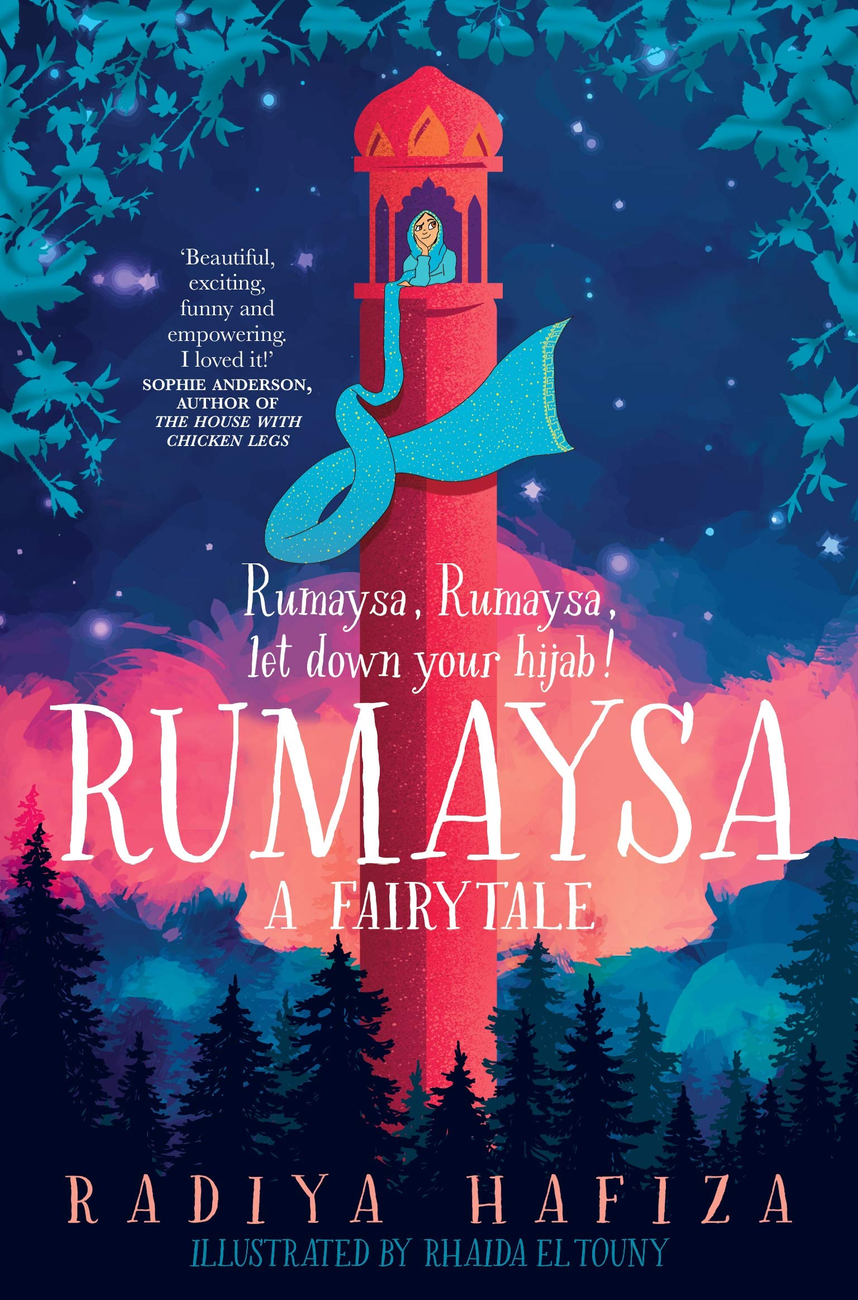
In Year 5 Writing this half term, following The Literacy Tree planning based on Rumaysa, pupils develop their narrative writing skills through rich character and setting description. They focus on using expanded noun phrases, relative clauses, fronted adverbials and a range of conjunctions to add detail and cohesion. Children practise using dialogue accurately (including correct punctuation), explore modal verbs and adverbs to show possibility, and use varied sentence structures and ambitious vocabulary to create atmosphere and engage the reader.
Maths
This term in Year 5, pupils develop confidence and fluency in maths through a range of practical and engaging activities. They extend their understanding of number, including fractions, decimals and percentages, and learn to compare, order and calculate with these. Pupils apply their knowledge to solve problems, reason mathematically and explain their thinking clearly. Lessons encourage making connections between concepts, exploring patterns, and using maths in real-life contexts, helping pupils become confident, independent and resilient mathematicians.
We follow a maths mastery approach, which focuses on depth rather than acceleration, ensuring that key concepts are fully grasped before moving on. Often, visual representations and hands on activities are studied before progressing to more abstract concepts. This ensures that students have a concrete understanding before moving on.
Science
Properties and changes of materials
In Year 5, pupils build a deep understanding of materials and their properties, exploring how everyday substances behave and interact. They compare and group materials based on characteristics such as hardness, solubility, transparency, electrical and thermal conductivity, and magnetic properties. Pupils develop scientific vocabulary to describe their observations accurately and explain why materials are chosen for particular purposes.
The unit introduces the concept of solutions and mixtures. Pupils investigate how some materials dissolve in liquids to form solutions and explore techniques to recover substances from solutions. Using their knowledge of solids, liquids, and gases, they explore methods for separating mixtures, including filtering, sieving, and evaporating, and consider how these processes are applied in real-world contexts.
Pupils also study physical and chemical changes. They observe and explain how dissolving, mixing, and changes of state are reversible, while some reactions result in the formation of new materials that cannot easily be reversed. Throughout the topic, children carry out practical investigations, make careful measurements, record results, and draw evidence-based conclusions. They develop critical thinking, reasoning, and problem-solving skills while understanding the importance of materials in everyday life and industry.
Forces
In Year 5, pupils develop a deeper understanding of forces and how they affect the motion of objects. They explore how gravity causes unsupported objects to fall towards the Earth and investigate the effects of friction, learning how it can slow or stop moving objects. Pupils examine air and water resistance and consider how these forces act in everyday situations.
The unit also introduces mechanical forces in simple machines. Pupils learn how levers, pulleys, and gears can be used to change the direction or magnitude of a force, and they investigate how these mechanisms make work easier. Throughout the topic, children carry out practical experiments to test their ideas, make careful observations, take accurate measurements, and draw conclusions based on evidence. They use scientific vocabulary such as gravity, friction, air resistance, water resistance, lever, pulley, and gear to explain their findings clearly.
By combining hands-on investigations with real-world examples, pupils develop critical thinking and problem-solving skills. They learn to plan fair tests, predict outcomes, and explain the effects of different forces on moving objects. This topic not only builds essential knowledge about physical forces but also encourages curiosity about how the world works, laying the foundation for future physics learning in secondary school.
Earth and Space
In Year 5, pupils develop a deeper understanding of Earth’s place in space and how celestial bodies move in relation to one another. They learn that the Earth rotates on its axis, causing day and night, and orbits the Sun once each year. Pupils also explore how the Moon orbits the Earth and investigate the phases of the Moon.
The unit introduces the structure of the solar system, where pupils learn about the eight planets and their relative positions from the Sun. They consider how scientific ideas about space have developed over time and how evidence from observation has helped us to understand the universe. Throughout the topic, children use scientific vocabulary such as orbit, rotation, axis, solar system, and phases to explain their understanding clearly.
By combining research, modelling and practical demonstrations, pupils develop enquiry skills and deepen their scientific thinking. They learn to use models to explain complex processes, identify patterns in observations, and communicate their ideas effectively. This topic builds a strong foundation for future learning in astronomy and physics, while encouraging curiosity about the wider universe.
Foundation Subjects
History - Anglo Saxons and Vikings
In Year 5, pupils explore the fascinating world of the Anglo-Saxons and Vikings, discovering how these groups lived, worked, and interacted in early medieval Britain. They learn about the different kingdoms, the daily lives of people, and the roles of kings, warriors, and communities. Pupils investigate how invasions, settlements, and cultural exchanges shaped society, from food and farming to clothing, homes, and traditions. They study key events, historical sources, and artefacts to understand how historians piece together the past and the impact these groups had on the development of Britain. As part of the topic, pupils have retold the epic story of Beowulf through illuminated work, using creative storytelling to connect literature with history and bring the period to life. This topic encourages pupils to think critically about how people lived, why events happened, and how history continues to influence our world today.
History - The Maya
In Year 5, pupils explore the Maya civilisation and compare it to Britain around 900 AD to understand differences in development and advancement. They learn about Maya city-states, social hierarchy, religion, farming, and achievements in writing, mathematics, and astronomy. Pupils examine daily life, including homes, food, and clothing, and consider how the Maya adapted to their rainforest environment.
The unit encourages children to use historical vocabulary such as civilisation, empire, hierarchy, trade, and agriculture to explain their ideas clearly. Through studying artefacts, primary sources, and historical evidence, pupils develop enquiry skills, asking questions and evaluating how and why the Maya were more or less advanced than Britain at the same time. This comparison helps them understand innovation, cultural achievements, and the ways societies adapt to their environment.
Art - LS Lowry
In Year 5, pupils study the work of LS Lowry, exploring his unique style and approach to depicting urban landscapes. They develop observational drawing skills, using both historical photographs and real-life views of the school and surrounding buildings as inspiration. Pupils focus on the technique of perspective, learning how to create the illusion of three-dimensional space on a flat surface. Through careful observation and practice, they experiment with scale, proportion, and positioning to make their drawings more realistic. This unit encourages children to analyse an artist’s methods, reflect on their own work, and apply new techniques to create detailed, visually engaging compositions that capture the character and atmosphere of everyday life.
Art - Colour -Abstract artwork
In Year 5, pupils explore the abstract art of Piet Mondrian, studying how he used geometric shapes, bold lines, and primary colours to create striking compositions. They develop an understanding of abstraction and how artists can convey ideas and balance through shape, colour, and arrangement rather than realistic representation. Pupils apply these ideas in a collaborative project, designing and arranging coloured shapes and lines at different angles to create a cohesive and visually engaging piece. The unit encourages experimentation, teamwork, and careful consideration of composition, helping pupils understand how colour, shape, and form can communicate ideas in a creative and abstract way.
P.E. Dance
In Year 5 dance this term, pupils explore movement inspired by the circus as a creative stimulus. They respond imaginatively to music and themes associated with circus characters and performances, developing sequences that show clear actions, dynamics and space. Pupils work both individually and collaboratively to compose motifs and link these into longer routines, incorporating elements such as characterisation, group formation and use of props to enrich their performance. They practise and refine their work, evaluating their own and others’ performances and applying feedback to improve control, balance, timing and expression. Through this unit, children build confidence, physical coordination and teamwork while learning to communicate ideas and stories through expressive dance in ways that reflect the complexity expected at this stage of the curriculum.
P.E. Net and Wall Games
In Year 5 PE, pupils develop their skills in net and wall games by learning to hit the ball on both sides of their body and above their head with increasing control and accuracy. They practise a variety of shots, including forehand, backhand, and volleys, to maintain rallies and create scoring opportunities. Pupils also focus on movement, positioning, and anticipating the ball’s direction, while applying tactics and teamwork to outplay opponents. Throughout the unit, children improve hand-eye coordination, reaction time, and strategic thinking, preparing them to participate confidently in competitive games.
Computing - Internet Safety and Coding
In Year 5, pupils develop a deep understanding of how to use technology safely, responsibly, and effectively. In our Internet safety lessons, they learn to think critically about the information they share online, understand the potential risks of digital communication, and know how to respond appropriately if something upsets them or makes them feel uncomfortable. Pupils are taught to apply the SMART rules to guide safe online behaviour, recognising the importance of protecting personal information, respecting others, and making responsible choices in digital environments.
Alongside Internet safety, pupils are developing their coding skills. They learn to design, write, and debug simple programs, using sequences, selection, and repetition to create working solutions. Pupils test and refine their code, applying logical thinking and problem-solving strategies to achieve specific outcomes. The combination of coding and digital literacy lessons helps pupils gain both practical computing skills and the critical awareness needed to navigate online spaces safely and effectively.
This approach ensures that pupils not only become competent and confident users of technology but also develop the resilience, analytical thinking, and creativity required to solve problems and collaborate successfully in a digital world.
Computing - Databases
In this topic, pupils develop their understanding of how information can be organised, stored, and retrieved using databases. They learn to search a database efficiently by using records and fields to find specific information and answer questions accurately. Pupils also explore how data is structured and understand the importance of consistent and accurate entry of information.
Building on these skills, pupils create their own databases on a chosen topic. They practise adding, editing, and organising records within fields, ensuring that data is entered correctly and can be easily accessed. Throughout the unit, pupils develop logical thinking, attention to detail, and problem-solving skills as they design, build, and query their databases.
Enrichment
Travel Safety Workshop
During our Travel Safety Workshop at the Sea Cadets in St Helens, pupils discovered the many ways to stay safe when travelling in different situations. They learned about the role of emergency services and how they respond quickly to keep people safe. Pupils took part in interactive activities, exploring safety equipment, practicing emergency procedures, and thinking about what to do in unexpected situations. The workshop helped them understand the importance of staying alert, following rules, and looking out for themselves and others while travelling. It was a fun and engaging way to learn about safety, teamwork, and responsibility in real-life scenarios.
Debate Academy
At Ashurst, we are committed to developing pupils who are confident, articulate, and capable of thinking critically about the world around them. This term, we are partnering with Debate Academy to deliver high-quality debating workshops that give pupils structured opportunities to explore stimulating and thought-provoking topics. These sessions are designed to engage all learners, providing a supportive environment in which every child can develop their voice and express ideas clearly.
Pupils learn to form and explain their own opinions, listen attentively to the perspectives of others, and build reasoned, persuasive arguments. They practise using evidence effectively to support their ideas and develop the confidence to challenge alternative viewpoints respectfully. Through this process, children refine their speaking and presentation skills, learning to communicate with clarity and poise in front of both small and larger audiences.
The workshops also foster essential transferable skills including teamwork, collaboration, critical thinking, and resilience. Pupils are encouraged to work together to explore different perspectives, analyse arguments, and adapt their thinking, which strengthens their ability to reason and problem-solve across the curriculum. By combining enjoyment, intellectual challenge, and practical skills, the Debate Academy programme equips pupils with the communication, reasoning, and interpersonal competencies that will benefit them both academically and in life beyond primary school.


