
Science Leader - Miss Hunter / Mr Barnes
At Ashurst Primary School, our science curriculum is designed to develop curiosity, deepen understanding and build confident young scientists. We believe science is a way of exploring, questioning and making sense of the world, and we provide a rich programme of study that is engaging, practical and ambitious for all pupils. Our approach ensures that children develop essential scientific knowledge and enquiry skills, while making links to real‑world phenomena and everyday life.
Early Years Foundation Stage (EYFS)
Science begins with the Understanding the World area of learning. Children use their senses to explore the natural world, observe living things, notice changes in the environment and talk about what they see, hear and feel. They are encouraged to be curious, ask simple questions and make sense of their surroundings through hands‑on experiences. This early exploration builds foundational skills in observation, description and discussion, preparing children to progress into Key Stage 1 with confidence.
Key Stage 1
The principal focus of science is to enable pupils to experience and observe phenomena in both the natural world and human‑made environments. Pupils are encouraged to be curious about what they notice, ask questions and begin to find answers through exploration and investigation. They cover topics such as plants, animals (including humans), everyday materials, and seasonal changes, learning to observe closely, perform simple tests, group and classify objects, and use their observations to suggest answers to questions. Most science learning at this stage is through first‑hand practical experiences, supported by appropriate secondary sources such as books, photographs and videos. Pupils also begin to use simple scientific language to talk about their findings and communicate their ideas in a range of ways.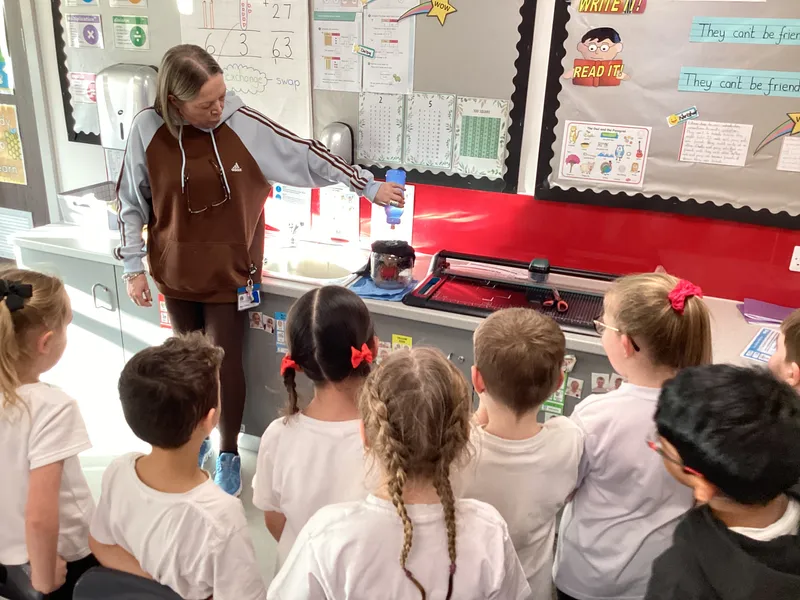
Key Stage 2
They continue to broaden and deepen their scientific understanding and investigative skills. The curriculum progressively builds on earlier learning and covers a wider range of substantive science content. Pupils explore topics including living things and their habitats, the life cycles of plants and animals, properties and changes of materials, forces and motion, Earth and space, and states of matter. They are taught to plan and carry out different types of scientific enquiries, including comparative and fair tests, make accurate measurements, collect and present data, draw conclusions based on evidence, and use scientific vocabulary and diagrams to explain their findings. Throughout Key Stage 2, pupils are also encouraged to recognise patterns, analyse relationships and apply their knowledge to explain real‑world phenomena.
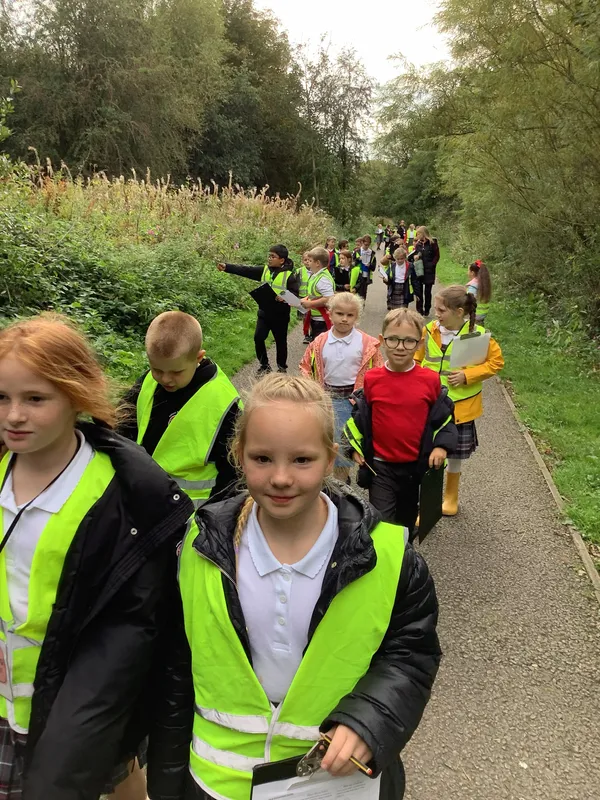
Across all key stages, our science curriculum emphasises the development of working scientifically skills, which are taught through and clearly linked to substantive content. These skills include asking questions, making predictions, observing over time, identifying and classifying, carrying out tests and researching using secondary sources of information. Pupils learn to communicate their ideas clearly, using appropriate scientific language, and to reflect on their learning to refine their understanding.
Science learning at Ashurst is hands‑on, enquiry‑based and relevant. Pupils engage in practical investigations, outdoor learning, fieldwork and themed science weeks that extend learning beyond the classroom and foster collaboration, resilience and critical thinking. We aim to equip pupils with the scientific knowledge, skills and confidence to think analytically, ask meaningful questions and understand how science impacts the world today and in the future.
Pictures of our Learning
Curriculum Documents
| Name | Format | ||
|---|---|---|---|
| Files | |||
| Example of EYFS Termly End Points.pdf | |||
| Example of Year 2 Termly End Points.pdf | |||
| Example of Year 6 Termly End Point.pdf | |||
| Science Intent Implementation and Impact 2025.pdf | |||
| Science Vocab Continuum.pdf | |||
CREST Superstar Awards - Summer 2025
Our brilliant scientists in Year 6 earned CREST Superstar awards by carrying out a series of problem-solving in STEM challenges. Children had the opportunity to learn through hands-on challenges by exploring the world around them. Congratulations!
British Science Week - March 2025
During British Science week pupils had the opportunity to enhance their knowledge and skills through the theme of 'Change and Adapt'. Pupils took part in a variety of activities and then presented them to the whole school in our own Science Fair. We are immensely proud that we are inspiring STEM individuals of the future and raising aspirations.
Science Fair
As part of our British Science Week celebrations, pupils took part in an exciting Science Fair where they designed, created and presented their own scientific experiments. The children worked incredibly hard to plan their investigations, make predictions and think carefully about how they would demonstrate their ideas to others.
During the fair, classes had the opportunity to visit each other’s stands and explore a wide range of experiments created by the pupils. These included investigations into paper aeroplanes and how different designs affect how far they travel, experiments exploring floating and sinking, demonstrations of magnetism, learning about the human body, and investigations into day and night, along with many more creative and engaging scientific ideas.
Pupils confidently demonstrated their experiments to visiting classes, explaining what they had done, what they had discovered and answering questions from their audience. It was fantastic to see the children speaking so clearly and enthusiastically about their learning, demonstrating excellent verbal communication and oracy skills.
We were incredibly proud of the effort, teamwork and enthusiasm shown throughout the event. The Science Fair was a wonderful opportunity for pupils to share their knowledge, learn from one another and celebrate their curiosity about the world around them, helping to inspire the scientists of the future.
Virtual Workshops and Visitors
Our science curriculum has been enriched by workshops and visitors this year. All cohorts have been inspired by experts and developed in their knowledge and science skills.


